
Responsible Gambling in Australia: Signs and Support
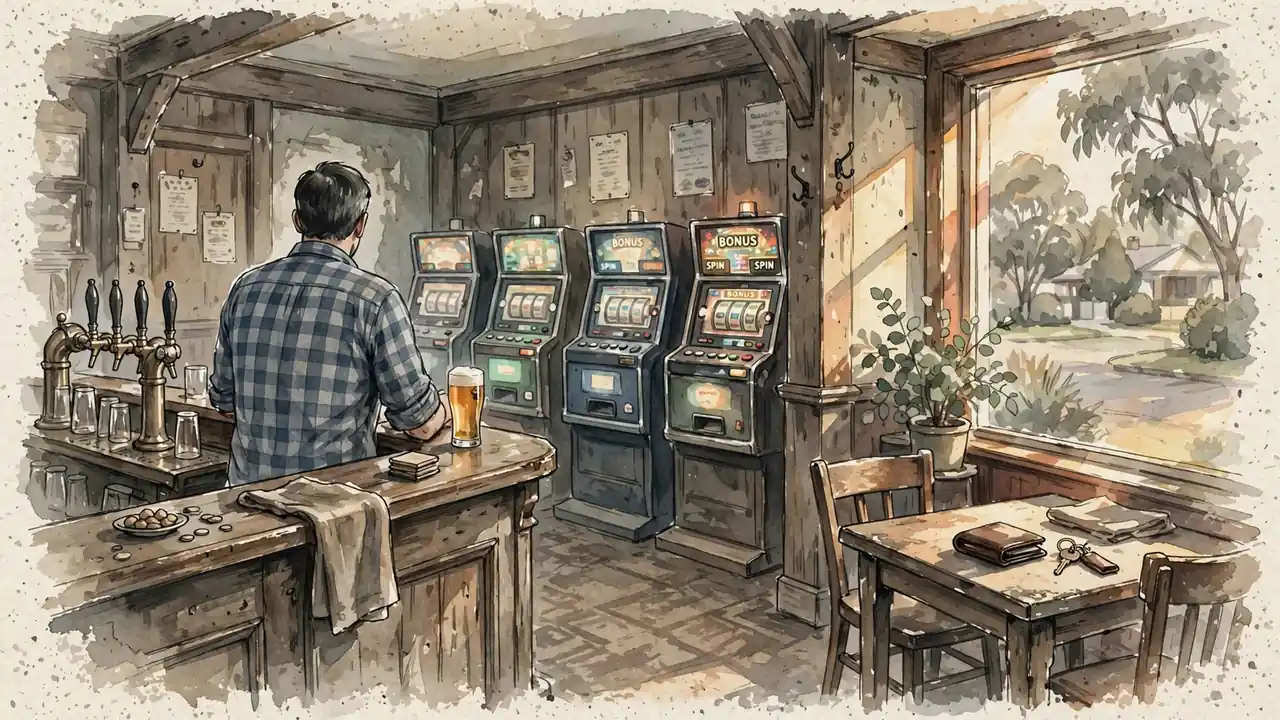
Australia has never quite decided what it thinks about gambling. A country that happily put poker machines in its suburban pubs also produced, in the Interactive Gambling Act 2001, one of the stricter pieces of internet regulation anywhere in the English-speaking world. The result is a peculiar arrangement: licensed Australian operators may offer sports and race wagering, while providing online casino games — pokies, roulette, blackjack, online poker — is illegal. Offshore sites exist and some hold licences from places like Malta or Curacao, but those licences do not authorise anyone to serve Australian customers, and they do not protect the Australian customer either.
This page is not about the law, though. It is about the person at the other end of it.
How to Recognise a Problem
The trouble with problem gambling is that it rarely announces itself. It arrives dressed as ordinary bad luck, and by the time the costume slips, the debts are usually real. The signs are observable, not mysterious:
- Chasing losses. Returning to gamble specifically to win back money already lost — the single most reliable marker of a shift from entertainment to harm.
- Borrowing to gamble. Money that was meant for rent, bills or groceries migrating into a betting account.
- Concealment. Hiding the extent of play from family, or lying about it outright.
- Escalation. Needing larger stakes to feel the same engagement.
- Preoccupation. Thinking about the next session while doing other things; planning the day around it.
- Neglected obligations. Work, study, relationships quietly reordered to fit a betting schedule.
One of these is a warning. Several together are a pattern.
It is worth saying plainly, because the industry’s advertising will never say it: gambling is not income. It is not an investment, not a side hustle, not a way out of a financial hole. The mathematics of the product does not permit it to be one. Anyone gambling to solve a money problem is gambling on the wrong thing entirely — the problem will grow, and the money will not.
The Age Question
The minimum age for commercial gambling in Australia is 18. That is the floor, not a recommendation. Age verification exists for a reason; the brain that finds gambling most compelling is the one least equipped to absorb its losses.
Self-Exclusion: BetStop
In 2019 the law changed to allow a national self-exclusion register, and the result is BetStop — https://www.betstop.com.au — the National Self-Exclusion Register for online wagering.
What it does is simple and, by the standards of most harm-reduction schemes, unusually honest: a single registration excludes a person from all Australian-licensed online and phone wagering services at once. No need to contact each operator separately. The minimum period is three months; the maximum is a lifetime.
The registration statistics are the most telling part. Around 40 per cent of people who register with BetStop choose to self-exclude for life — not three months, not a year, but permanently. Fewer than 20 per cent settle for the minimum three months. More than 14 per cent have extended or reactivated their exclusion, which suggests the first decision, however brief, was not made lightly or in error.
One honest limitation: BetStop does not cover offshore casino operators. It is a national register for nationally licensed services, and offshore sites sit outside its reach. This is one of several reasons the offshore corner of the internet deserves a wide berth — no licence relevant to Australia, no protection, no recourse.
Worth knowing too: since 11 June 2024, credit cards and cryptocurrency are banned as deposit methods for Australian online gambling. The only legal deposit routes for licensed Australian wagering are debit cards, bank transfer, PayID/Osko and BPAY. The logic is hard to argue with — borrowed money and gambling make poor companions.
Where to Get Help
This is the part of the page that matters most, so it will not be relegated to a footnote.
Gambling Help Online — https://www.gamblinghelponline.org.au — free, confidential support, available 24 hours a day, seven days a week. For anyone reading this at three in the morning, that hour is covered.
Gambler’s Help — https://www.gamblers.help — the Victorian service and part of the national support network.
BetStop — https://www.betstop.com.au — the National Self-Exclusion Register described above. A person can register before the next impulse arrives, which is precisely the point.
Lifeline — https://www.lifeline.org.au — for the moments when the gambling is not the only thing weighing. Gambling harm and psychological distress travel together more often than either admits.
The National Gambling Helpline operates 24 hours a day, every day of the year. The National Consumer Protection Framework for Online Wagering sets the obligations that licensed online wagering providers must meet — a policy scaffold that exists, in the end, because enough people needed one.
A Closing Note on Rules and Reason
A regulator’s register, a helpline, a self-exclusion scheme — none of these exist because Australians are uniquely reckless. They exist because gambling was legalised, commercialised and advertised with enthusiasm, and societies that profit from a habit tend, eventually, to build hospitals for it. Australia has done so more thoroughly than most.
Anyone who wants to check whether a wagering operator holds an Australian licence can consult the register of licensed interactive wagering service providers published by the ACMA, or cross-reference a licence number on a regulator’s official website. It takes a few minutes. Consider it time well spent.
And if the signs listed above describe someone known to the reader — or the reader themselves — the services above are not a last resort. They are the first sensible step.
The house always has an edge. The helpline does not.